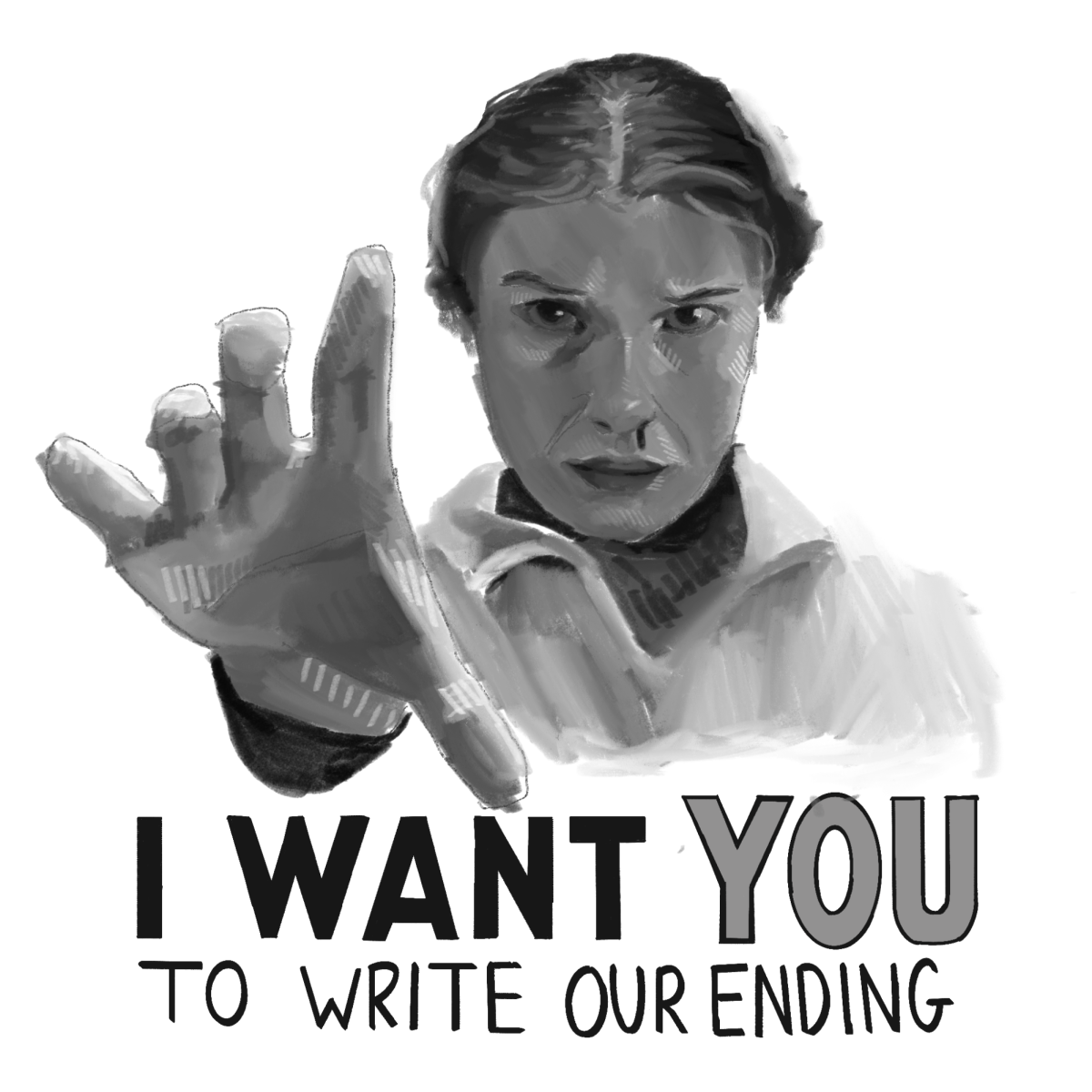



Gen Z has been tasked with a challenging feat: competing with technology in order to save their future. The rise of AI has been slowly overpowering the impact of human contribution.
Growing up with technology that continuously improved itself made kids more reliant on technology, creating a potentially harmful habit. According to the National Library of Medicine, festering habits such as these can cause a disrupted parent-child connection, affecting their emotional and cognitive growth.
David Tobechukwu, junior, says that although he doesn’t use AI for school-related purposes; he uses it to find answers to simple questions on a daily basis.
“I personally don’t use AI to the point where it would impair my complex thinking, but there are people out there that spend their whole day talking to an AI girlfriend or getting AI friends to the point where they don’t want to leave their homes anymore. [They’re] the point where they can not hold an active conversation with anyone who isn’t family,” Tobechukwu said.
With technology growing more prominent every year, new systems such as AI are starting to take over entire careers, putting current workers on leave and aspiring workers left to switch career decisions. According to the National University, 30% of U.S. jobs could be self-operating by 2030.
What that means for today’s teens approaching their adulthood is garnering their soft skills. These more human-centric skills are based on communication critical thinking, adaptability, leadership, and having a great work ethic.
It’s evident that AI isn’t disappearing anytime soon, and Associate Principal William Bicker suggests that adapting to the software and learning how to use it the correct way will allow us to work with AI safely.
“If you think about it, any new technology [doesn’t become] mastered immediately. It takes sometimes hundreds, if not thousands, of years to really master that piece of technology. We’re at that stage right now. We’re at ground zero,” Bicker said.
Principal Lisa Smith recalls the introduction of AI to schools becoming a big concern for teachers alike.
“With the evolution of AI, the goal is [for it] to be seen as a tool. It is not a replacement for learning. And working through that transition, I think that’s kind of where we’re at at this point because it’s ever changing as well.
AI hasn’t only been introduced into the working industry, but it’s also been a key factor in creative fraud as well.
Last year Tilly, an AI actress, was introduced to the film industry. Producer Eline Van der Velden launched her as a new “tool” to use creatively, but she immediately received angry reactions from SAG-AFTRA.
Xania Monet, an AI-generated singer, became an example in November of 2025, when she debuted at number thirty on a Billboard chart for R&B music. Similarly, an AI-generated band “The Velvet Sundown” received around one million views on Spotify in a few short weeks.
Creative spaces are becoming more and more endangered as time goes on, altering the way humans consume media. It’s even made its way into schools and become a harmful weapon against critical thinking in students.
English teacher Danielle Brown observes its positive and negative effects on her students, but said she has mostly been irked by the negative aspects, as she mostly sees AI being used for plagiarization in student essays. She feels that their confidence in their own thought-out answers is slipping and becoming more reliant on generated ideas.
“I think there are a lot of really great resources out there that can help students learn. Finding apps that tailor learning to the individual student is great, but it needs to be used in moderation. It should help students learn how to think, not give them answers that allow them to avoid thinking for themselves,” Brown said.
As the oppression of AI slowly consumes our generation,, it seems learning how to work with the system is our best survival strategy.